If you’re thinking about moving to Canada, you may already know that there are multiple immigration programs to choose from. But how do you determine which one is right for you? The process of choosing the right immigration program can be overwhelming, especially for first-time applicants. Whether you want to study, work, or settle permanently in Canada, the first step is to understand your options and select the program that aligns with your goals and qualifications. In this guide, we’ll walk you through the different immigration pathways available to help you make an informed decision on how to apply for Canadian immigration.
Step 1: Understand Your Goals
The first step in choosing the right immigration program is understanding your immigration goals. Ask yourself a few key questions:
- Do you want to work in Canada? If yes, you might want to explore work permits or pathways that allow you to gain work experience in Canada.
- Are you interested in studying in Canada? If you’re planning to pursue education in Canada, a study permit might be the best option for you.
- Do you want to live in Canada permanently? If your goal is to settle in Canada long-term, you’ll likely be considering permanent residency options.
- Do you want to bring your family to Canada? Many programs allow for family reunification, including spousal sponsorship and dependent children sponsorship.
The answers to these questions will help narrow down your options and guide you toward the best program.
Step 2: Know the Types of Immigration Programs
Canada offers a wide variety of immigration pathways. Let’s break down some of the most common programs for different goals.
1. Express Entry System – For Skilled Workers
If you have skilled work experience and want to live in Canada permanently, the Express Entry system is one of the most popular and fast-track routes. The system is for skilled professionals and includes three main programs:
- Federal Skilled Worker Program (FSW): For individuals with work experience in skilled occupations (e.g., IT professionals, engineers, managers).
- Federal Skilled Trades Program (FST): For individuals with experience in skilled trades (e.g., electricians, plumbers, welders).
- Canadian Experience Class (CEC): For individuals who already have Canadian work experience.
Eligibility is based on a points system (the Comprehensive Ranking System or CRS), and the highest-scoring candidates receive Invitations to Apply (ITA) for permanent residency.
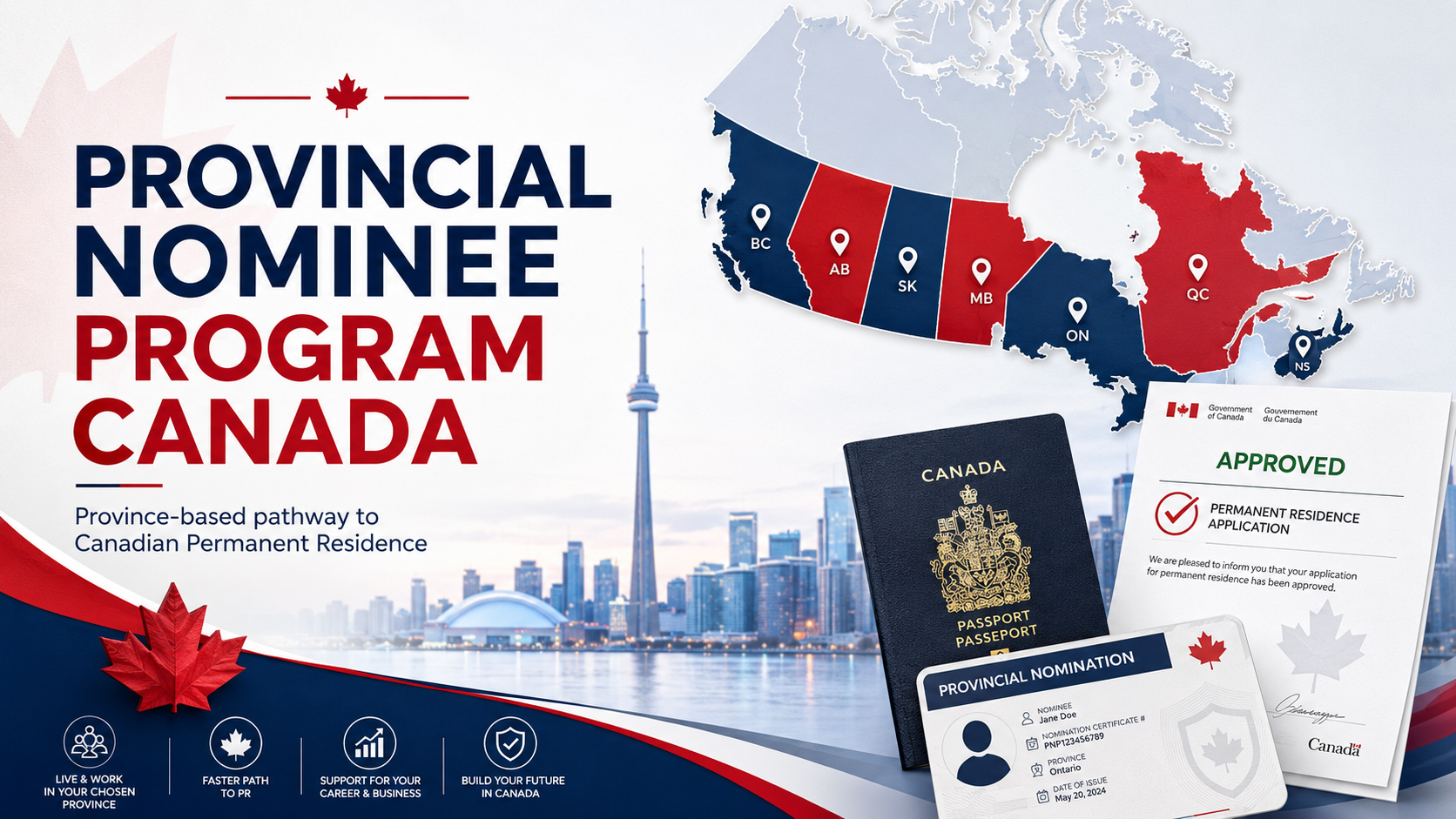
2. Provincial Nominee Program (PNP) – For Provincial or Regional Immigration
If you want to live and work in a specific Canadian province, the Provincial Nominee Program (PNP) might be the best option. Each province or territory has its own PNP, designed to meet its unique labor market needs.
Some key programs under PNP include:
- Skilled Worker Streams: For individuals with experience in high-demand occupations in the province.
- Entrepreneur and Business Immigration: For individuals who wish to start a business or invest in a Canadian province.
- International Graduate Streams: For international students who graduated from a designated learning institution in the province.
A PNP nomination can also significantly boost your chances of being invited to apply for permanent residency through the Express Entry system.
3. Family Sponsorship – For Reuniting with Loved Ones
If you’re a Canadian citizen or permanent resident, you can sponsor certain family members to immigrate to Canada. This includes:
- Spouse or Common-Law Partner: You can sponsor your spouse or partner for permanent residency.
- Dependent Children: You can sponsor your children under 22 years old (and over 22 if they are financially dependent due to a disability).
- Parents and Grandparents: You can sponsor your parents or grandparents to live with you in Canada.
Family sponsorship is an excellent option if reuniting with your loved ones is a priority.
4. Study Permit – For International Students
If you want to study in Canada, you’ll need a study permit. Canadian educational institutions are world-renowned, and a study permit is the first step toward living and studying in Canada.
As an international student, you may also be eligible to work part-time during your studies and apply for a Post-Graduation Work Permit (PGWP) after completing your program. The PGWP can also serve as a pathway to permanent residency in Canada if you gain work experience after graduation.
5. Work Permit – For Temporary Employment
If you want to work temporarily in Canada, you’ll need a work permit. There are two main types of work permits:
- Employer-Specific Work Permit: For individuals with a job offer from a specific Canadian employer. Your employer must first obtain a Labour Market Impact Assessment (LMIA) unless exempt.
- Open Work Permit: For individuals who do not have a job offer but are eligible for specific open work permits, such as spouses of skilled workers or students.
Work permits are often used by individuals who want to gain work experience in Canada or extend their stay temporarily.
6. Business Immigration – For Entrepreneurs and Investors
If you have experience in business and want to start a business in Canada, you may be eligible for business immigration programs. These include:
- Start-Up Visa Program: For entrepreneurs who want to establish an innovative business in Canada.
- Investor Programs: For individuals with significant financial resources who wish to invest in Canadian businesses.
- Self-Employed Persons Program: For individuals in cultural or athletic professions who can contribute to Canada’s economy through their self-employed work.
Step 3: Assess Your Eligibility
Once you’ve decided which program aligns with your goals, the next step is to check your eligibility for that program. Each immigration pathway has specific criteria, such as:
- Work Experience: Required for skilled worker and business immigration programs.
- Language Proficiency: Many programs require you to demonstrate proficiency in English or French through recognized tests (e.g., IELTS, TEF).
- Education: Some programs require specific levels of education, such as a high school diploma, bachelor’s degree, or higher.
- Age: Younger applicants typically earn more points under the Express Entry system.
- Financial Resources: You may need to demonstrate that you have sufficient funds to support yourself and your family while in Canada.
Step 4: Start the Application Process
After assessing your eligibility, you can start the application process. Each program has a specific application procedure, and the F.A.L. Immigration Services Ltd. team is here to guide you through it. We help with:
- Gathering required documents such as work experience letters, educational credentials, and language test results.
- Filling out application forms correctly and ensuring that all necessary information is provided.
- Submitting your application and communicating with the Canadian authorities on your behalf.
Step 5: Seek Professional Help (If Needed)
Choosing the right immigration program and navigating the application process can be challenging. Seeking assistance from an experienced Regulated Canadian Immigration Consultant (RCIC) can help you save time, reduce stress, and avoid common mistakes that may delay your application. At F.A.L. Immigration Services Ltd., we offer personalized consultations to help you assess the best immigration pathway and guide you through the entire process from start to finish.
Get Started Today!
Choosing the right immigration program is an important first step in making your Canadian dream a reality. Whether you want to work, study, or live permanently in Canada, we’re here to help. Contact us today for a free consultation, and let’s get started on your journey to Canada!