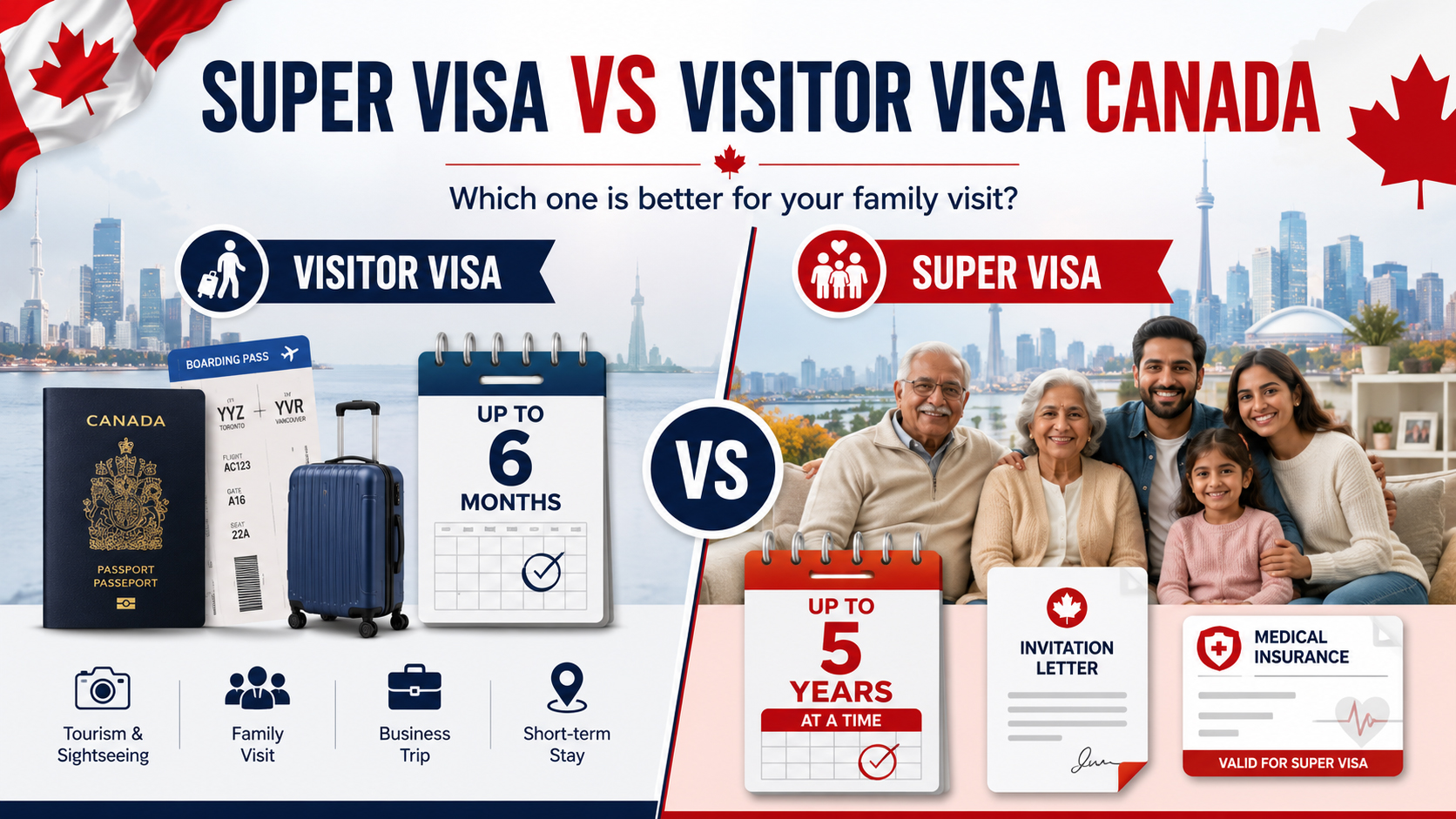
Canada is one of the most popular destinations for family reunification, and if you’re a Canadian citizen or permanent resident, you may want to bring your parents or grandparents to visit you. To do so, you have two main visa options: the Super Visa and the Visitor Visa.
Both visas allow foreign nationals to visit Canada, but they have significant differences in terms of eligibility, duration of stay, and requirements. In this blog post, we’ll explain the key differences between the Super Visa and Visitor Visa and help you determine which one is the best option for your situation.
What is a Super Visa?
The Super Visa is a special visa introduced by the Canadian government in 2011 to allow parents and grandparents of Canadian citizens or permanent residents to visit Canada for an extended period. Unlike a standard visitor visa, the Super Visa offers longer stays and allows for multiple entries to Canada.
Key Features of the Super Visa:
- Longer Duration: The Super Visa allows parents and grandparents to stay in Canada for up to two years at a time, without the need to renew the visa. This is much longer than the standard Visitor Visa, which typically allows a stay of only six months.
- Multiple Entries: The Super Visa is valid for up to 10 years and allows for multiple entries during its validity period. After each entry, parents or grandparents can stay for up to two years.
- No Need for Extensions: Once granted, the Super Visa eliminates the need for frequent visa extensions, making it a more convenient option for long-term stays.
Eligibility: The Super Visa is available only to parents and grandparents of Canadian citizens or permanent residents.
What is a Visitor Visa?
A Visitor Visa, also known as a Temporary Resident Visa (TRV), is a short-term visa for individuals who want to visit Canada for tourism, family visits, business, or other short-term purposes. It allows individuals to stay in Canada for up to six months at a time.
Key Features of the Visitor Visa:
- Shorter Duration: The Visitor Visa typically allows for a stay of six months or less, which is ideal for tourists or short-term visitors.
- Limited Stay: If you want to stay longer than six months, you’ll need to apply for an extension before your current stay expires.
- Single or Multiple Entry: A Visitor Visa can be issued as a single-entry visa or a multiple-entry visa. The multiple-entry visa allows you to come and go from Canada multiple times within the visa’s validity period.
- General Eligibility: The Visitor Visa is open to anyone wishing to visit Canada temporarily, including parents, grandparents, other family members, friends, and tourists. Unlike the Super Visa, it is not restricted to just parents and grandparents of Canadian citizens or permanent residents.
Key Differences Between the Super Visa and Visitor Visa
Let’s take a closer look at how the Super Visa and Visitor Visa compare in terms of eligibility, duration, and requirements:
| Feature | Super Visa | Visitor Visa |
| Eligibility | Parents and grandparents of Canadian citizens or permanent residents. | Available to anyone wishing to visit Canada temporarily (tourists, family, business). |
| Duration of Stay | Up to 2 years per visit. | 6 months per visit (extensions possible). |
| Visa Validity | Valid for up to 10 years with multiple entries. | Valid for a shorter period (up to 6 months or 1 year) with single or multiple entries. |
| Multiple Entries | Yes, with multiple entries allowed. | Yes, depending on the type of visa issued (single or multiple entry). |
| Eligibility for Extension | No need for extensions; the visa lasts for 2 years per visit. | Can apply for extensions (before the current visa expires). |
| Medical Insurance | Applicants must have private medical insurance for at least one year in Canada. | Not mandatory, but recommended. |
| Processing Time | Generally longer due to additional requirements. | Generally quicker than Super Visa applications. |
Which One Should You Apply For?
Choosing between the Super Visa and the Visitor Visa depends on your specific situation. Here are some factors to consider when deciding which visa to apply for:
1. Duration of Stay
- Super Visa: If your parents or grandparents wish to stay in Canada for extended periods without the hassle of renewing their visa, the Super Visa is the best option. It allows them to stay up to two years at a time and is valid for up to 10 years.
- Visitor Visa: If your family members only wish to visit for a short time (up to six months), a Visitor Visa is a more appropriate choice.
2. Frequency of Visits
- Super Visa: If your parents or grandparents plan to visit frequently over the years, the Super Visa provides the convenience of multiple entries over a long period (up to 10 years).
- Visitor Visa: For individuals who need to visit Canada occasionally or for short visits, the Visitor Visa might be sufficient. However, remember that it typically has a shorter validity period and will need to be renewed more frequently.
3. Eligibility
- Super Visa: Only available to parents and grandparents of Canadian citizens or permanent residents. If your loved ones meet this criterion and you want them to stay for extended periods, the Super Visa is ideal.
- Visitor Visa: If you want to bring other family members or friends to visit Canada temporarily, the Visitor Visa is the right choice. It is more flexible and available to a broader range of individuals.
4. Medical Insurance
- Super Visa: To qualify for the Super Visa, your parents or grandparents must have valid medical insurance from a Canadian provider for at least one year. This can be an important factor to consider when applying.
- Visitor Visa: While medical insurance is not required for a Visitor Visa, it’s still strongly recommended to cover unexpected medical expenses during the visit.
How to Apply for a Super Visa vs. Visitor Visa
The application process for both the Super Visa and Visitor Visa is similar, but there are some key differences:
1. Super Visa Application Process
- Step 1: Ensure your parents or grandparents meet the eligibility requirements, including having private medical insurance for at least one year.
- Step 2: Gather documents such as proof of relationship, proof of Canadian citizenship or permanent residency, medical insurance details, and financial support documentation.
- Step 3: Submit the application online or at the nearest Visa Application Centre (VAC).
- Step 4: Wait for processing. The Super Visa process typically takes longer than a regular Visitor Visa.
2. Visitor Visa Application Process
- Step 1: Ensure your loved ones meet the basic eligibility criteria for a Visitor Visa.
- Step 2: Gather required documents such as a passport, invitation letter (if applicable), proof of financial support, and travel details.
- Step 3: Apply online or through a Visa Application Centre (VAC).
- Step 4: Wait for processing. The Visitor Visa process is generally quicker than the Super Visa.
Conclusion
Choosing between a Super Visa and a Visitor Visa depends on your family’s needs and the length of stay you’re looking for. The Super Visa is ideal for parents and grandparents who wish to stay in Canada for extended periods, while the Visitor Visa is better suited for those seeking short-term visits.
If you’re unsure about which visa is right for your family, F.A.L. Immigration Services Ltd. is here to help. Our experienced consultants can guide you through the application process, ensuring all the required documents are in order and helping you maximize your chances of success.
Contact us today for a consultation, and let us assist you in bringing your loved ones to Canada!