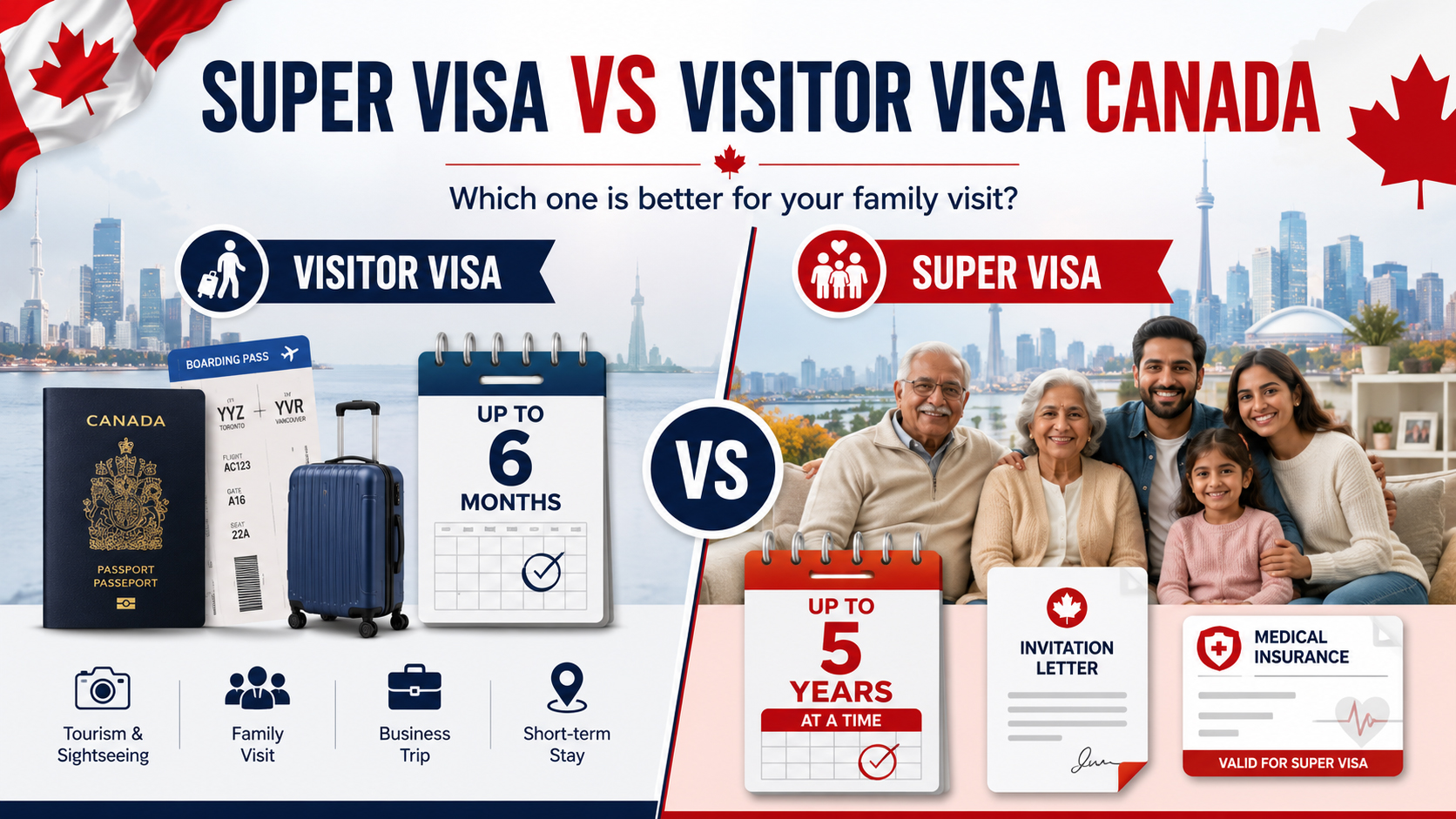
Many families want to bring their loved ones to Canada for a temporary visit. Some want their parents or grandparents to stay for a longer period, while others only need a short family visit, vacation, business trip, or special event visit.
Two common options are the Canada Visitor Visa and the Canada Super Visa. Both allow temporary entry to Canada, but they are designed for different purposes. A visitor visa is usually suitable for short visits, while a Super Visa is specifically designed for eligible parents and grandparents who want to stay with their children or grandchildren in Canada for a longer time. IRCC states that a Super Visa can allow parents and grandparents to visit for 5 years at a time and provides multiple entries for up to 10 years.
Choosing the right option is important. The wrong application type can lead to delays, weak documentation, or refusal. This guide explains the key differences between a Canada Super Visa and a Visitor Visa so you can better understand which one may fit your situation.
What Is a Canada Visitor Visa?
A Canada Visitor Visa, also known as a Temporary Resident Visa, allows eligible foreign nationals to travel to Canada temporarily. People commonly apply for a visitor visa for tourism, family visits, short vacations, business meetings, conferences, weddings, graduations, or other temporary purposes.
Most visitors can stay in Canada for up to 6 months. However, the border services officer may allow a shorter or longer stay at the port of entry. If the officer gives a specific leave-by date, that date may be written in the passport or shown on a visitor record.
A visitor visa is generally best for people who want to visit Canada for a short period and do not need long-term stay permission.
What Is a Canada Super Visa?
A Canada Super Visa is a special temporary resident visa for eligible parents and grandparents of Canadian citizens, Canadian permanent residents, or persons registered under Canada’s Indian Act. It is designed for longer family visits.
Unlike a regular visitor visa, the Super Visa allows eligible parents and grandparents to stay in Canada for up to 5 years at a time. It also provides multiple entries for up to 10 years, which makes it useful for families who want longer and more flexible visits.
The Super Visa has stricter requirements than a regular visitor visa. The applicant must meet eligibility requirements, the Canadian host must meet income requirements, and the applicant must provide proof of adequate medical insurance.
Main Difference Between Super Visa and Visitor Visa
| Topic | Canada Visitor Visa | Canada Super Visa |
|---|---|---|
| Main purpose | Short temporary visits | Long visits for parents and grandparents |
| Who can apply | Eligible foreign nationals | Parents/grandparents of eligible hosts in Canada |
| Typical stay | Up to 6 months | Up to 5 years at a time |
| Multiple entry | May be issued as single or multiple entry | Multiple entries for up to 10 years |
| Host income requirement | Not always required | Required |
| Medical insurance | Recommended, not always mandatory | Required |
| Medical exam | Depends on situation | Required for Super Visa eligibility |
| Best for | Tourism, short family visits, business visits | Long family visits by parents/grandparents |
The biggest difference is the length of stay. If someone wants to visit Canada for 6 months or less, IRCC advises applying for a visitor visa. If a parent or grandparent wants to visit their child or grandchild for more than 6 months, the Super Visa may be the better option.
Who Should Choose a Visitor Visa?
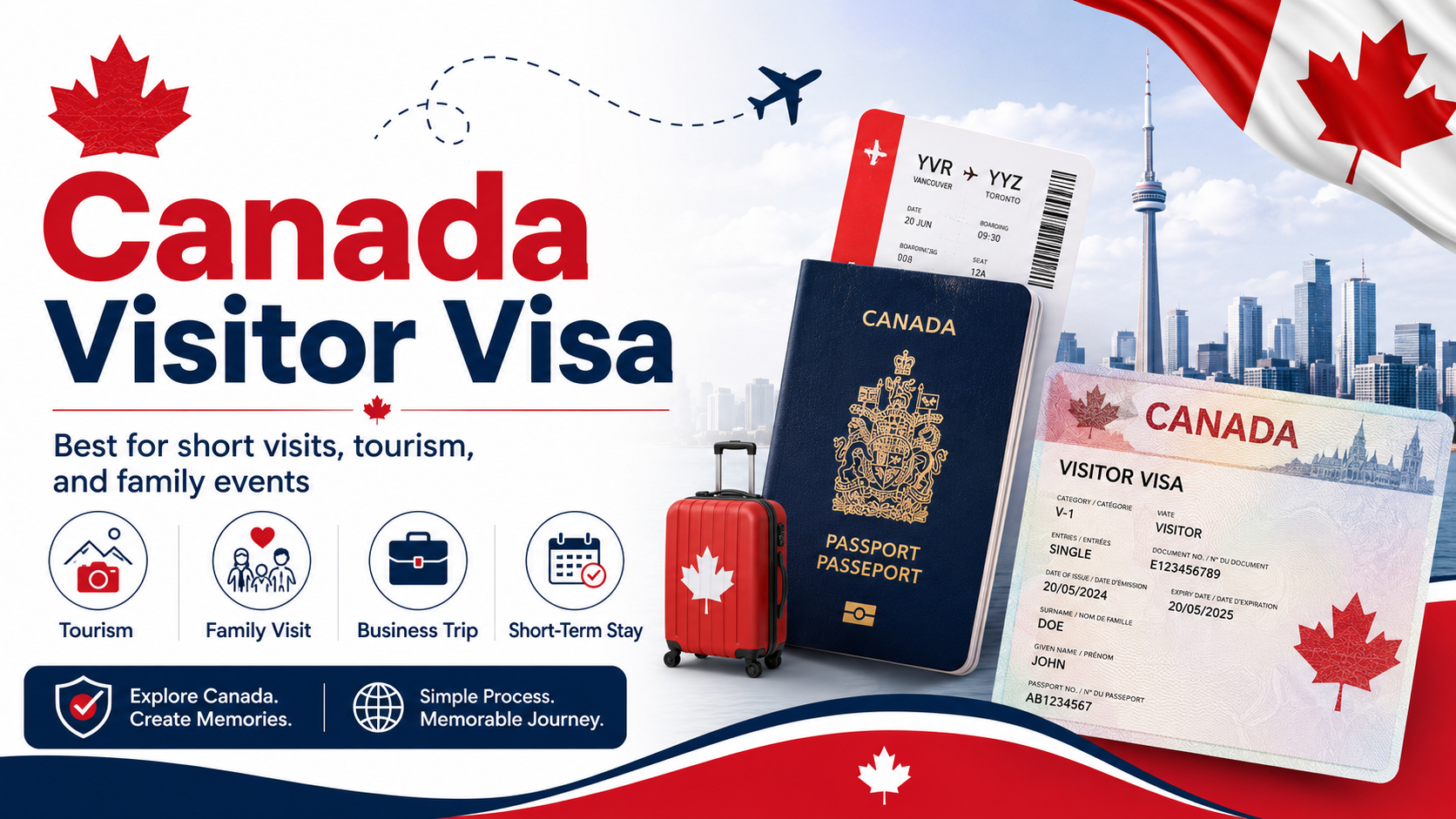
A Canada Visitor Visa may be better if the applicant is planning a short visit. It is commonly suitable for tourists, friends, siblings, relatives, business visitors, or parents and grandparents who only plan to stay for a short time.
A visitor visa may be the right choice if:
The visit is 6 months or less
The applicant is not a parent or grandparent of the Canadian host
The purpose is tourism, family event, business meeting, or short vacation
The applicant does not need long-term stay permission
The applicant cannot meet the Super Visa insurance or host income requirements
For example, if someone wants to attend a wedding in Canada, visit family for a few weeks, attend a business meeting, or take a short vacation, a regular visitor visa may be enough.
Who Should Choose a Super Visa?
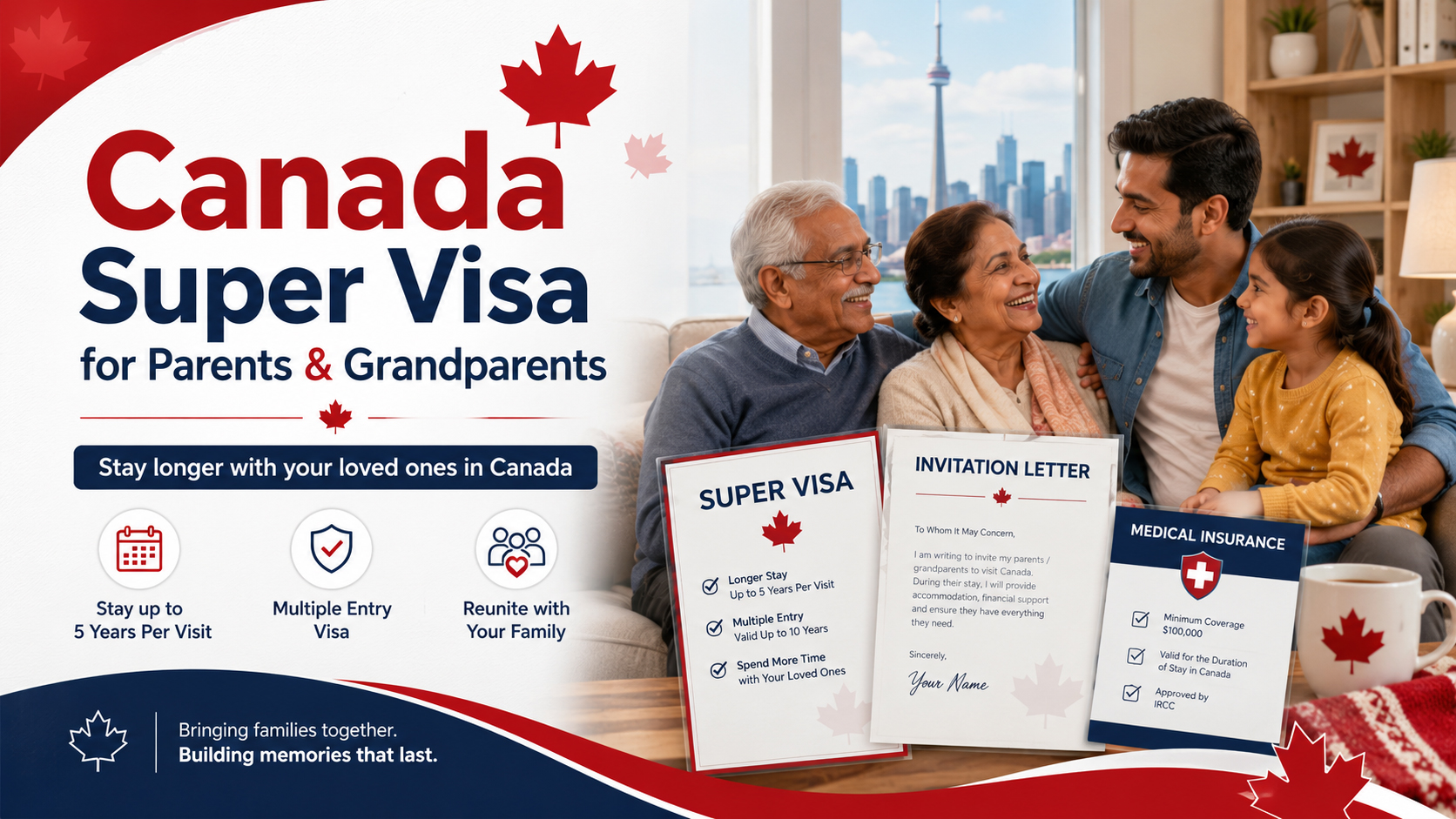
A Super Visa may be better for parents and grandparents who want to spend a longer time with family in Canada. It is especially useful when the Canadian child or grandchild wants their parent or grandparent to visit for more than 6 months without applying for frequent visitor record extensions.
A Super Visa may be the right choice if:
The applicant is a parent or grandparent of an eligible host in Canada
The host is a Canadian citizen, permanent resident, or registered Indian
The planned stay is longer than 6 months
The host can meet the income requirement
The applicant can provide valid medical insurance
The applicant can complete the required medical exam
The applicant can still prove temporary intent
IRCC confirms that parents and grandparents who entered Canada on or after June 22, 2023, may be eligible to stay for 5 years at a time under the Super Visa.
Super Visa Eligibility Requirements
The Super Visa has specific eligibility requirements. The applicant must be the parent or grandparent of an eligible host in Canada. The host must be the applicant’s child or grandchild and must meet Canadian status and financial support requirements.
A strong Super Visa application usually includes:
Proof of relationship with the host
Letter of invitation from the child or grandchild in Canada
Proof of the host’s Canadian status
Proof that the host meets the minimum income requirement
Proof of medical insurance
Immigration medical exam
Valid passport and identity documents
Evidence that the applicant will leave Canada at the end of the authorized stay
IRCC states that the host’s invitation letter must include proof that they can financially support the applicant during their stay in Canada.
Visitor Visa Eligibility Requirements
A visitor visa application focuses mainly on temporary intent. The applicant must show that they are coming to Canada for a genuine temporary purpose and that they will leave Canada at the end of their authorized stay.
A strong visitor visa application may include:
Valid passport
Clear purpose of visit
Proof of funds
Travel history, if available
Employment or business documents
Family ties in the home country
Property, study, employment, or financial ties
Invitation letter, if visiting family or friends
Travel plan or itinerary
Proof of accommodation
Evidence that the applicant will return home
For family visits, IRCC explains that the person in Canada can write a letter of invitation and send it to the visitor, who then includes it with the visitor visa application.
Medical Insurance: Super Visa vs Visitor Visa
Medical insurance is one of the most important differences between a Super Visa and a Visitor Visa.
For a regular visitor visa, medical insurance is not always a mandatory visa requirement. However, it is still strongly recommended because visitors are usually not covered by Canadian provincial health care, and medical costs can be high.
For a Super Visa, medical insurance is required. IRCC states that Super Visa applicants must have adequate health insurance, and the insurance requirement is part of the Super Visa eligibility framework.
Common Super Visa insurance mistakes include buying a policy for the wrong duration, choosing an unacceptable provider, not showing proof of payment, or submitting an insurance document that does not meet the required conditions.
Host Income Requirement: Super Visa vs Visitor Visa
A regular visitor visa does not always require a formal minimum income threshold from a Canadian host. However, if the host is financially supporting the visitor, financial documents from the host may help support the application.
For a Super Visa, host income is a core requirement. The host must show that they can financially support the parent or grandparent during the stay. IRCC provides specific guidance for calculating family size and proving the host meets the minimum necessary income requirement.
Common host income documents may include:
Notice of Assessment
Employment letter
Pay stubs
T4 or T1 documents
Bank statements
Other acceptable financial proof
If the host does not meet the income requirement, the Super Visa application may become weak or may not qualify.
Length of Stay: Which Visa Gives More Time?
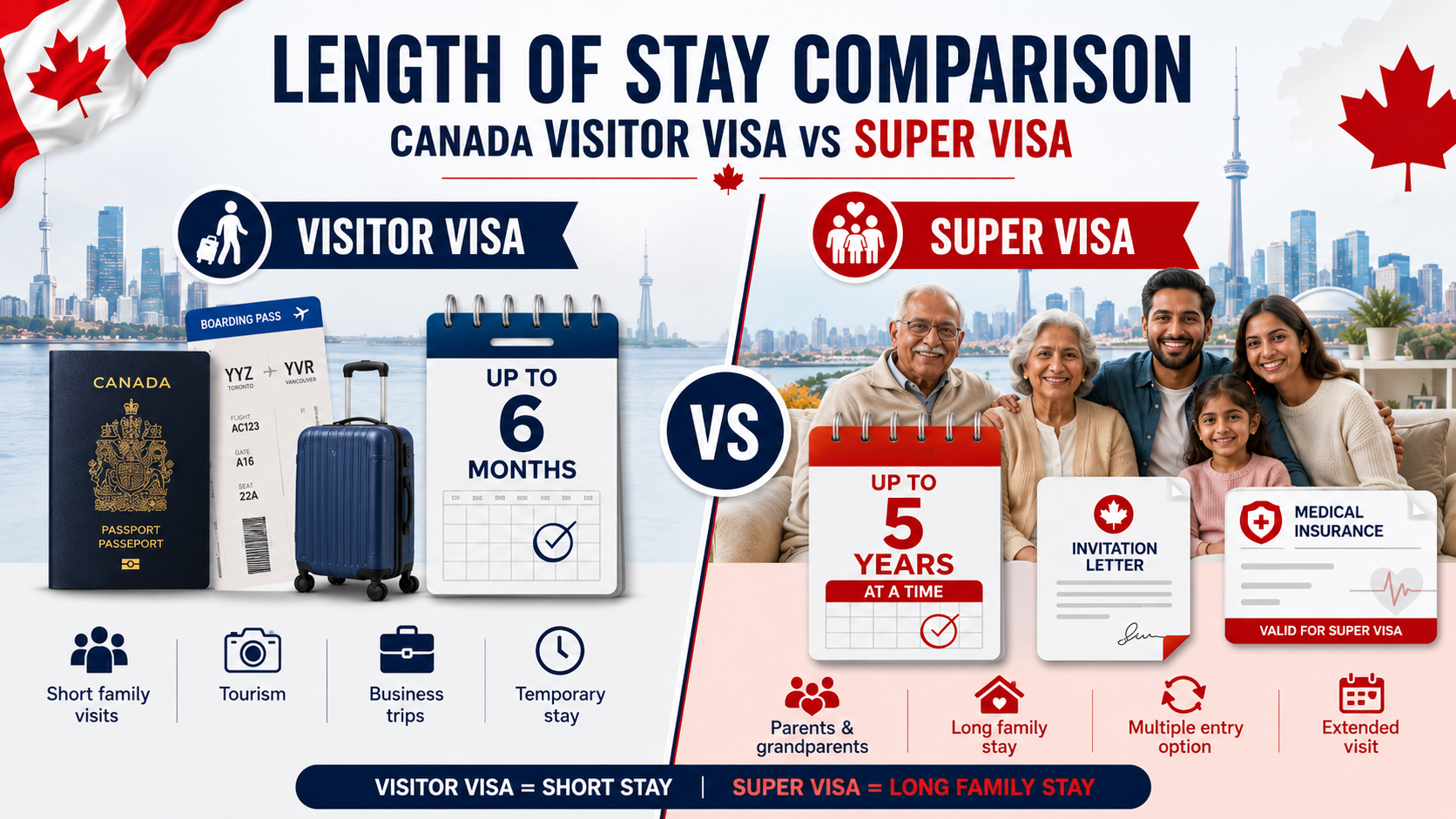
For most visitors, a regular visitor visa allows a stay of up to 6 months in Canada, unless a border services officer gives a different period.
A Super Visa can allow eligible parents and grandparents to stay in Canada for up to 5 years at a time. This is one of the main reasons families choose a Super Visa instead of a regular visitor visa.
For short visits, the visitor visa is usually enough. For longer family stays, the Super Visa is usually more suitable if all requirements are met.
Can You Extend Your Stay in Canada?
If a regular visitor wants to stay longer in Canada, they generally need to apply for a visitor record. A visitor record is not a visa. It is a document that allows a temporary resident to stay in Canada longer as a visitor.
IRCC recommends applying to extend visitor status at least 30 days before the current status expires.
If a person applies to extend their stay before their current status expires, they may be able to legally remain in Canada while waiting for a decision. This is called maintained status.
Super Visa holders may not need extensions as frequently because the allowed stay can be much longer. IRCC also notes that parents and grandparents visiting on a Super Visa may apply for 2-year extensions to their stay while still in Canada.
Super Visa vs Visitor Visa: Which One Is Better?
There is no single best option for everyone. The better choice depends on the applicant’s relationship to the Canadian host, purpose of visit, length of stay, financial situation, insurance ability, and immigration history.
Choose a Visitor Visa if the applicant wants a short temporary visit, is coming for tourism or business, is not a parent or grandparent of the host, or plans to stay for 6 months or less.
Choose a Super Visa if the applicant is an eligible parent or grandparent, wants to stay longer than 6 months, has a host who meets the income requirement, and can provide valid medical insurance.
In simple terms, the Visitor Visa is better for short visits, while the Super Visa is better for long visits by eligible parents and grandparents.
Common Visitor Visa Mistakes
Visitor visa applications may be refused when the applicant does not clearly prove temporary intent or when the documents do not support the purpose of travel.
Common mistakes include:
Weak purpose of visit
Poor proof of funds
No clear travel plan
Weak ties to home country
Incomplete invitation letter
Inconsistent information
Lack of employment, business, or family evidence
Unclear accommodation plan in Canada
A visitor visa application should clearly show why the applicant is travelling, how the trip will be funded, where they will stay, and why they will return home.
Common Super Visa Mistakes
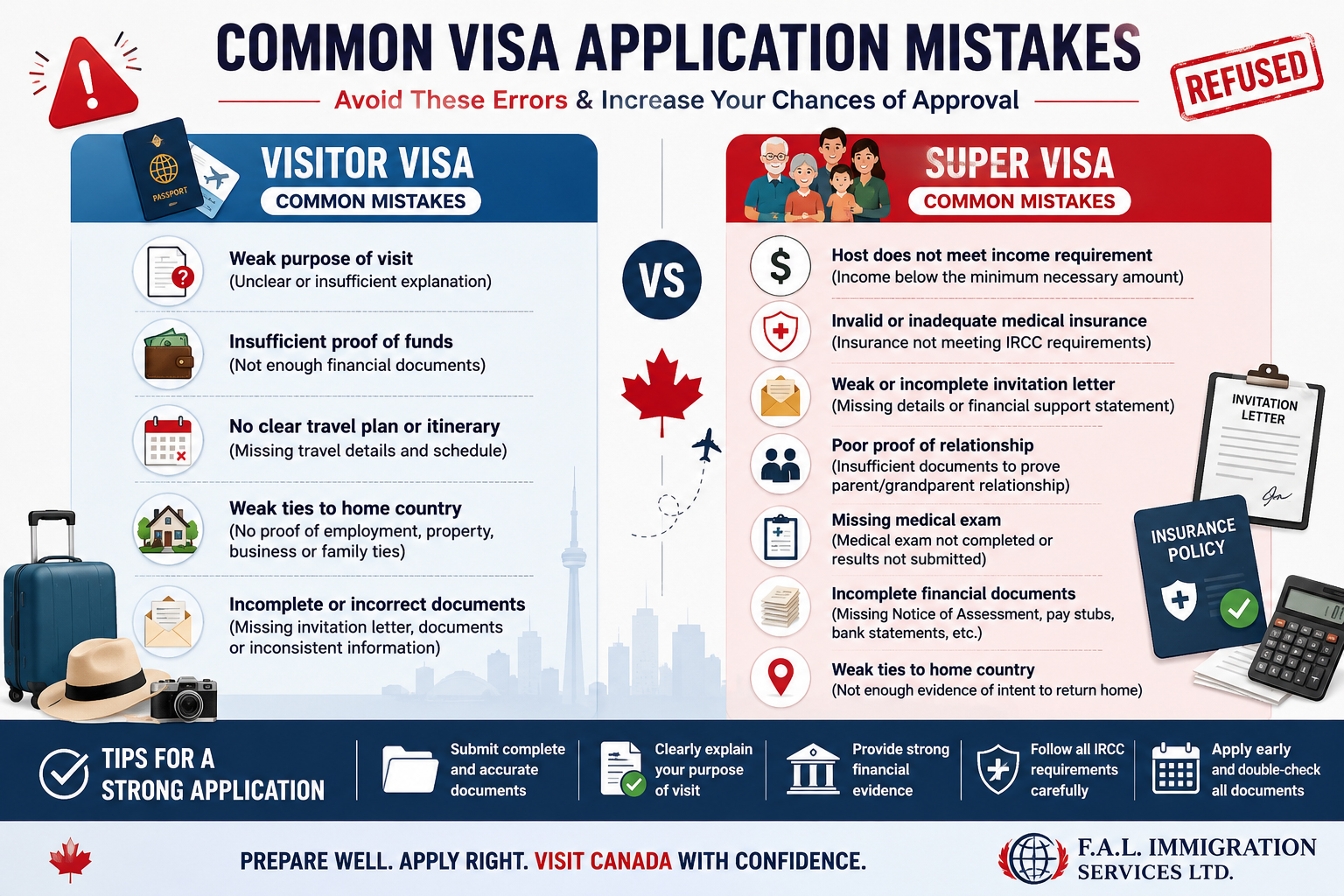
Super Visa applications may be refused or delayed if the applicant or host does not meet the specific requirements.
Common mistakes include:
Host does not meet income requirement
Medical insurance does not meet requirements
Missing or weak invitation letter
Poor proof of relationship
Weak proof of temporary intent
Missing medical exam
Incomplete financial documents
Inconsistent family size calculation
Weak ties to home country
A Super Visa application should show both sides clearly: the parent or grandparent’s eligibility and the host’s ability to support them.
Practical Comparison Example
Imagine a mother wants to visit her daughter in Canada for 3 months to attend a family event. In this case, a regular visitor visa may be suitable because the visit is short.
Now imagine a grandfather wants to stay with his son’s family in Canada for 2 years to spend more time with grandchildren. In this case, a Super Visa may be more suitable because it is designed for longer stays by parents and grandparents.
The key question is not only “Which visa is stronger?” The better question is: Which visa matches the applicant’s real purpose and eligibility?
How F.A.L. Immigration Services Ltd. Can Help
F.A.L. Immigration Services Ltd. can help you choose between a Canada Super Visa and a Visitor Visa based on your situation. Our team can review your eligibility, prepare a document checklist, draft invitation letters, organize proof of funds, review host income documents, check Super Visa insurance requirements, and guide you through the application process.
Whether you are planning a short family visit or a long stay for parents or grandparents, proper preparation can make your application clearer, stronger, and more organized.
Final Thoughts
Both the Canada Visitor Visa and Super Visa are useful temporary residence options, but they serve different purposes.
A visitor visa is usually better for tourism, business trips, short family visits, and stays of 6 months or less. A Super Visa is usually better for eligible parents and grandparents who want to stay with their children or grandchildren in Canada for a longer period.
Before applying, review your purpose of visit, relationship to the host, financial documents, insurance requirement, and length of stay. A well-prepared application should be honest, consistent, and supported by strong documents.
Need help choosing between a Canada Super Visa and Visitor Visa? Book a consultation with F.A.L. Immigration Services Ltd. today for professional guidance on your application.