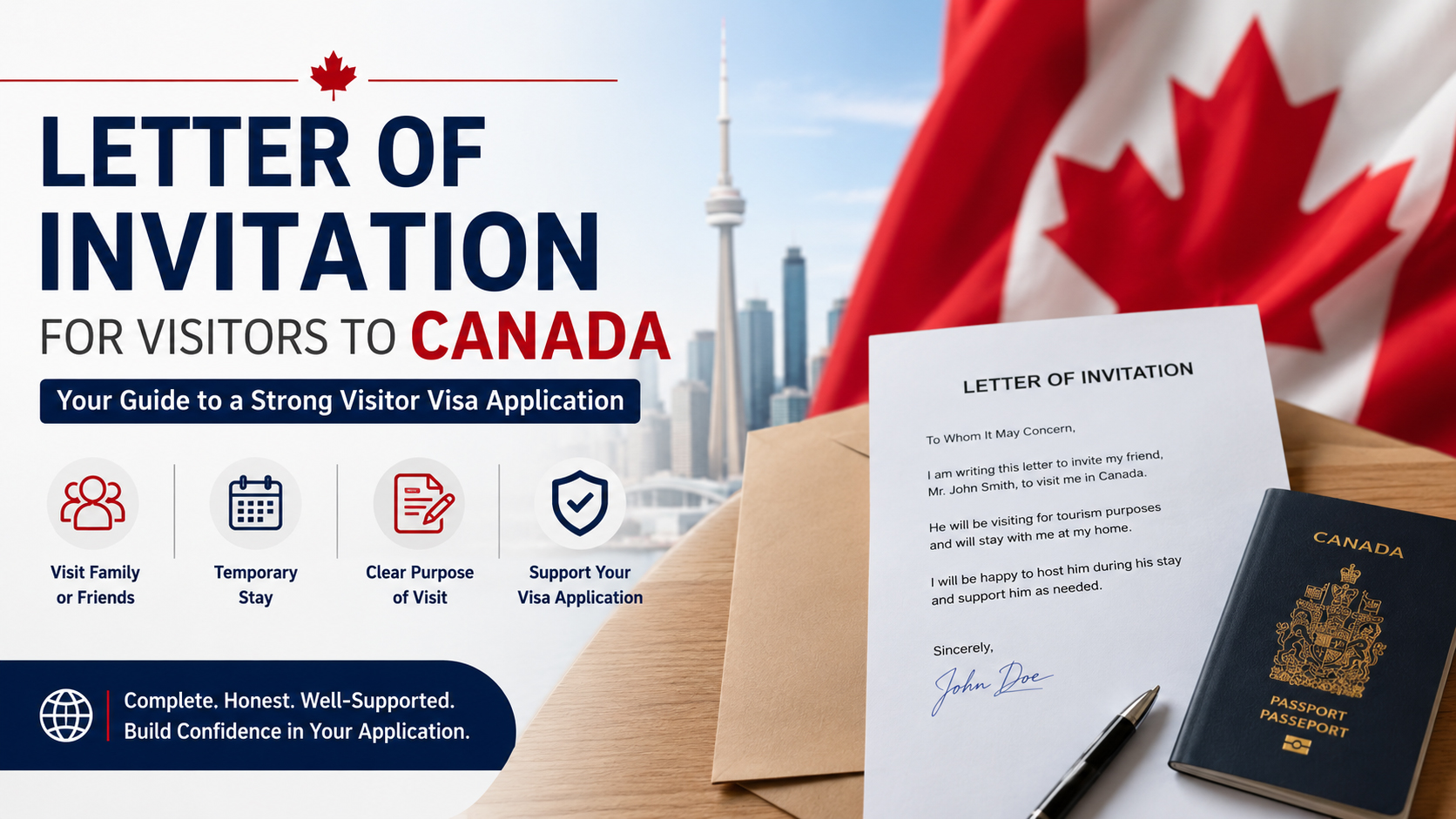
When applying for a Canada visitor visa, also known as a Temporary Resident Visa, some applicants may be asked to provide a letter of invitation from someone living in Canada. This letter can support the visitor’s application by explaining who is inviting them, why they are coming, where they will stay, and how their visit will be managed.
However, it is important to understand one key point: a letter of invitation does not guarantee visa approval. Immigration, Refugees and Citizenship Canada confirms that visa officers assess each applicant to decide whether they meet Canada’s immigration requirements.
What Is a Letter of Invitation for Canada?
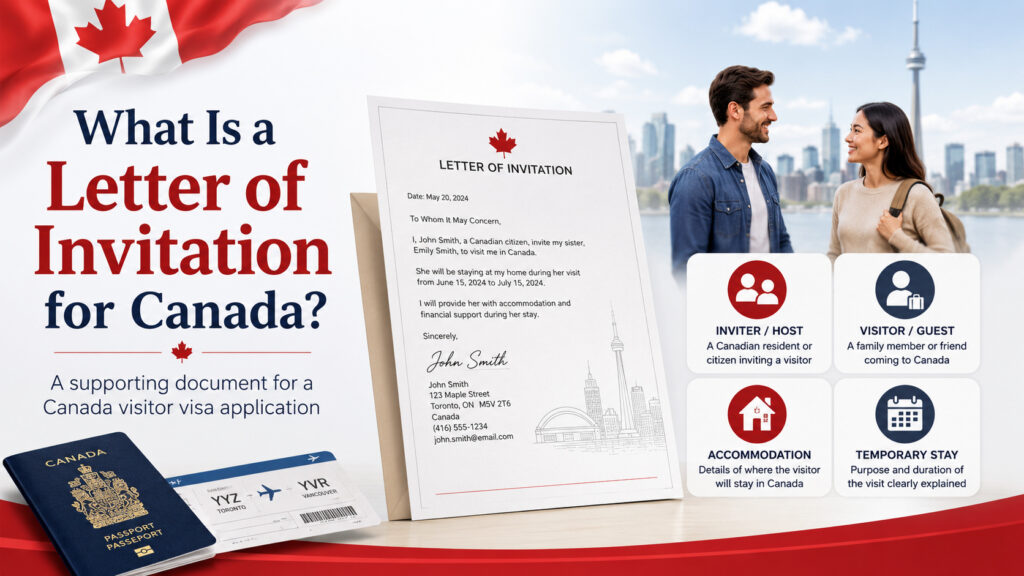
A letter of invitation is a written statement from a person in Canada who is inviting a family member, friend, or visitor to come to Canada for a temporary stay. It helps explain the purpose of the visit and the relationship between the visitor and the host.
This letter is usually included with the visitor visa application. The person in Canada writes the letter and sends it to the visitor, who then uploads or submits it with their visa documents.
Does an Invitation Letter Guarantee a Canada Visitor Visa?
No. An invitation letter can support the application, but it does not guarantee approval. The visa officer still reviews the applicant’s full profile, including travel history, financial situation, family ties, employment, purpose of visit, and whether the applicant is likely to leave Canada at the end of the authorized stay.
A strong invitation letter can help make the purpose of travel clearer, but it must be supported by truthful documents and a well-prepared application.
Who Can Write a Letter of Invitation?
A letter of invitation is usually written by someone living in Canada, such as:
- A family member
- A relative
- A friend
- A host
- A business contact or organization, for business-related visits
For family or personal visits, the inviter should clearly explain their relationship with the visitor. For business visits, the invitation letter should usually come from the Canadian company or organization hosting the visitor.
Information About the Visitor That Should Be Included
The invitation letter should include clear details about the person being invited to Canada. These details help the visa officer understand who the visitor is and why they are travelling.
The letter should include:
- Visitor’s complete name
- Date of birth
- Full address and telephone number
- Relationship between the inviter and the visitor
- Purpose of the trip
- Planned length of stay in Canada
- Where the visitor will stay
- How the visitor will pay for travel, accommodation, and living expenses
- Planned date of departure from Canada
These details should be accurate and consistent with the visitor’s application forms and supporting documents.
Information About the Person Inviting the Visitor
The inviter should also include their own details in the letter. This allows the visa officer to understand the inviter’s status in Canada and their ability to host or support the visitor.
The inviter should include:
- Complete name
- Date of birth
- Address and telephone number in Canada
- Job title
- Status in Canada, such as Canadian citizen or permanent resident
- Proof of status in Canada
- Family details, including spouse and dependants, if applicable
Proof of status may include a Canadian birth certificate, citizenship document, PR card, proof of landing, or other accepted status documents.
Is the Inviter Legally Responsible for the Visitor?
Writing an invitation letter does not automatically make the inviter legally responsible for the visitor after they arrive in Canada. However, the letter must be written honestly and in good faith. Any promise made in the letter should be realistic and truthful.
For example, if the inviter says they will provide accommodation, they should genuinely be prepared to do so. If they say they will financially support the visitor, they should be able to show that they have the means to provide that support.
What Makes a Strong Invitation Letter?
A strong Canada visitor visa invitation letter should be:
Clear: It should explain the purpose of the visit in simple and direct language.
Consistent: Dates, names, addresses, and travel plans should match the visa application and supporting documents.
Specific: It should mention where the visitor will stay, how long they will stay, and why they are visiting.
Truthful: The inviter should not exaggerate income, relationship, accommodation, or financial support.
Well-supported: The letter should be accompanied by proof of the inviter’s status in Canada where required.
Common Mistakes to Avoid
Many visitor visa applications become weak because the invitation letter is too general or incomplete. Common mistakes include:
- Missing the visitor’s full details
- Not explaining the relationship clearly
- Not mentioning the purpose of travel
- Giving unclear travel dates
- Making unsupported financial promises
- Forgetting to include the inviter’s Canadian status document
- Using information that does not match the application forms
- Writing a letter that sounds copied, vague, or unrealistic
A visitor visa application should not rely only on the invitation letter. The applicant must still show strong reasons to visit Canada temporarily and return home after the trip.
Should the Visitor Carry the Invitation Letter When Travelling?
Yes, it is recommended. IRCC states that if a person was invited to Canada, they should bring the invitation letter with them because a border services officer may ask to see it when they arrive. A visa and travel document do not automatically guarantee entry; the final entry decision is made at the border.
Final Thoughts
A letter of invitation can be a helpful supporting document for a Canada visitor visa application, especially when the applicant is visiting family, friends, or a host in Canada. But the letter must be complete, truthful, and supported by proper evidence.
The best invitation letters are not overly complicated. They clearly explain who is inviting the visitor, why the visitor is coming, how long they will stay, where they will live, and how the expenses will be covered.
Need Help Preparing a Canada Visitor Visa Application?
F.A.L. Immigration Services Ltd. can help you review your visitor visa documents, prepare a professional invitation letter format, and organize your application package with proper supporting evidence.
Contact F.A.L. Immigration Services Ltd. today for professional guidance on your Canada visitor visa application.
FAQs About Canada Visitor Visa Invitation Letter
Is a letter of invitation mandatory for a Canada visitor visa?
Not always. Some applicants may be asked to provide one depending on their situation. If you are visiting family or friends in Canada, an invitation letter can be a useful supporting document.
Can a permanent resident write an invitation letter?
Yes. A Canadian permanent resident can write an invitation letter, but they should include proof of their status, such as a PR card or proof of landing.
Can a Canadian citizen invite a visitor?
Yes. A Canadian citizen can invite a family member, friend, or visitor to Canada. They should include proof of citizenship with the invitation letter.
Does the invitation letter need to be notarized?
IRCC does not say every invitation letter must be notarized for all cases. However, some visa offices may request notarization depending on the situation or location.
Can the inviter pay for the visitor’s expenses?
Yes. The inviter may offer to pay for accommodation, food, travel, or other expenses. However, they should only promise support they can genuinely provide.
What if the visitor will pay for their own trip?
That is acceptable. The letter should clearly state that the visitor will cover their own expenses and include details about where they will stay.
Should the invitation letter include travel dates?
Yes. The letter should mention the planned arrival date, length of stay, and expected departure date from Canada.
Can an invitation letter overcome weak financial documents?
No. A letter can support the application, but the visitor must still show that they meet Canada’s visitor visa requirements.
Should the invitation letter be emotional or formal?
It should be professional, clear, and truthful. Emotional language is not necessary. Visa officers need facts, not exaggerated statements.
Who submits the invitation letter?
The inviter sends the letter to the visitor. The visitor then includes it with their Canada visitor visa application.